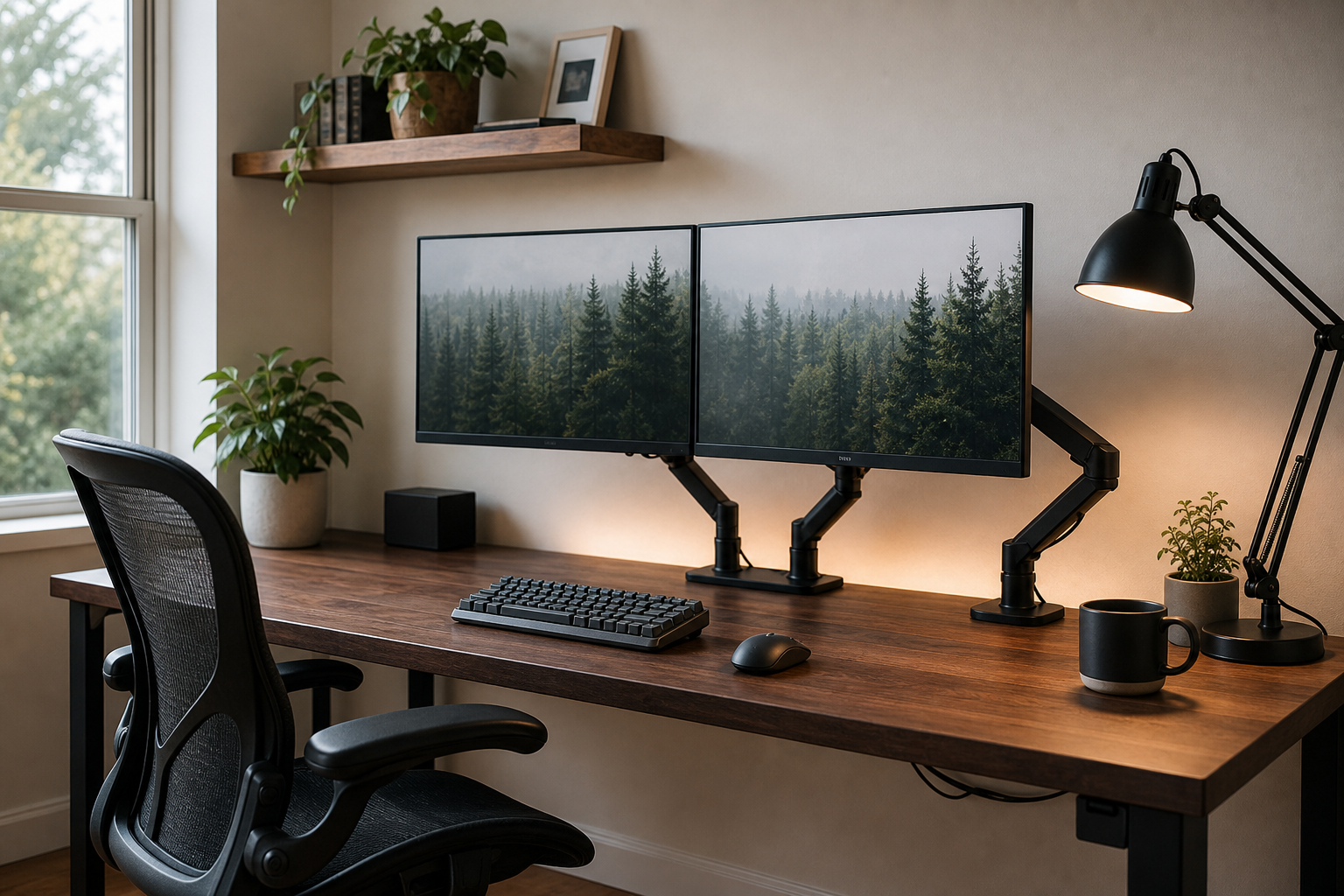
Start with your desk and work habits
A good home office setup starts with the desk you already use, the number of screens you need, your daily work pattern, and the gear you touch most often. Before buying, check desk thickness, monitor weight, outlet placement, and the space needed to move your chair comfortably.
- For monitor arms, compare screen weight limits, VESA support, clamp style, and height range.
- For keyboards, compare layout, switch feel, wrist angle, and wired or wireless connection.
- Use online and local stores to verify price, delivery, return policy, and availability without treating any listing as a final recommendation.
Spend more where you feel it daily
Lighting, seating, and input devices affect the experience of the desk every day. Comfort is personal, so it is better to compare adjustability, fit, and return options than to assume one chair, lamp, or keyboard suits everyone.
- For desk lamps, look at brightness control, color temperature, glare control, and footprint.
- For ergonomic chairs, compare seat height, back support, arm adjustment, caster type, and floor compatibility.
- For keyboards and pointing devices, test typing feel and hand position when possible before committing.
Plan for cable control and future changes
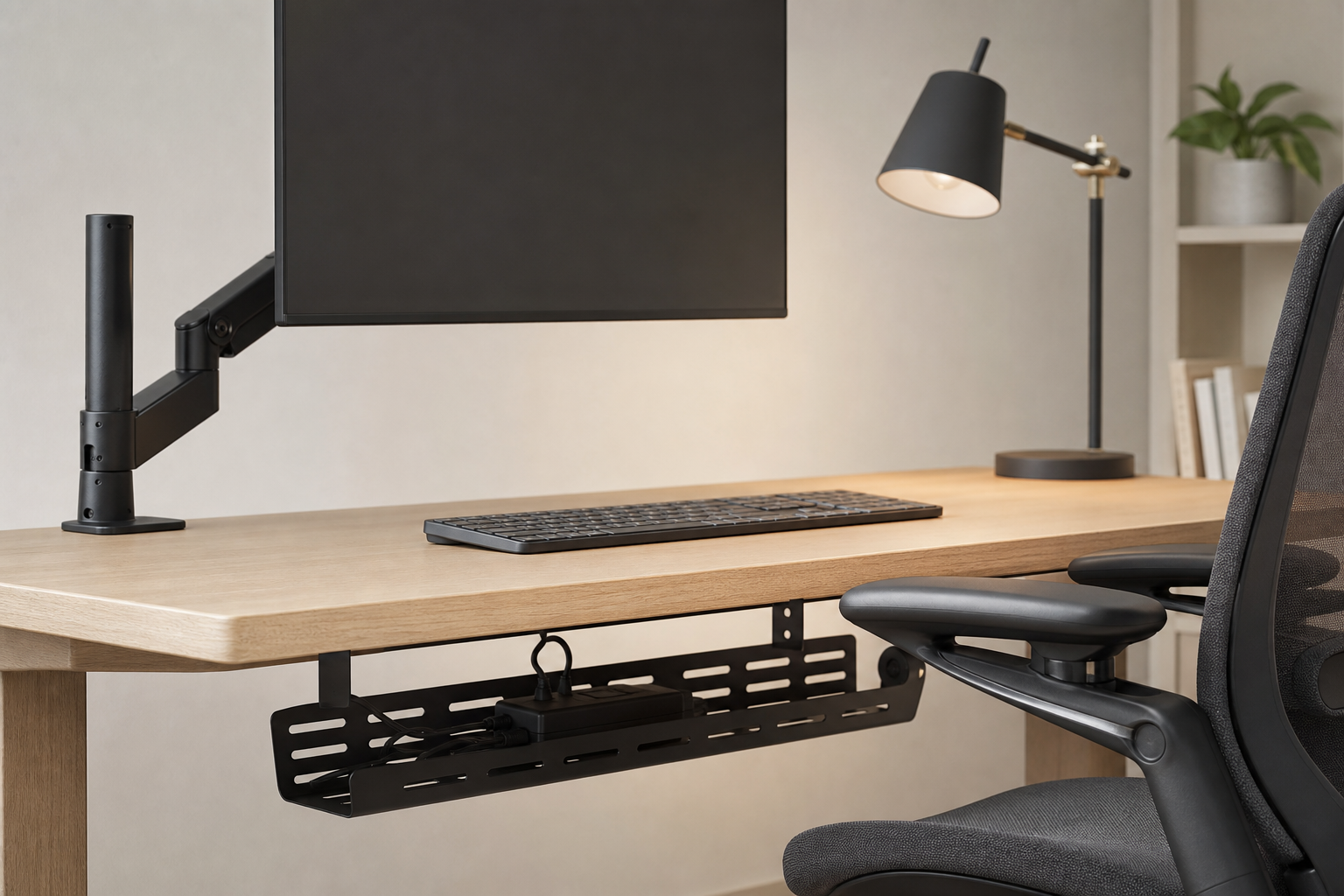
Cable management is not just cosmetic. A clear cable path makes it easier to replace chargers, docks, lamps, and monitors later. A setup that can adapt usually works better than one that looks perfect only on the first day.
- Combine cable trays, hook-and-loop ties, clips, and labels for easier cleaning and swaps.
- Check whether power strips can mount under the desk and whether plug spacing fits your adapters.
- Before adding gear, compare it with your existing monitor arm, hub, charger, desk depth, and cable routes.
Frequently asked questions
What should I compare first?
A practical guide to choosing monitor arms, keyboards, lighting, chairs, and cable management for a balanced home office setup. Start with use frequency, dimensions, warranty, replacement parts, recent reviews, and the return policy before chasing the lowest price.
Should I check Amazon, Coupang, or AliExpress first?
Use Amazon and Coupang for fast delivery categories, then compare AliExpress for low-cost accessories, parts, and bundles.
Where should I confirm price and availability?
Prices, coupons, shipping times, and stock change often, so confirm the final details on the merchant page before buying.