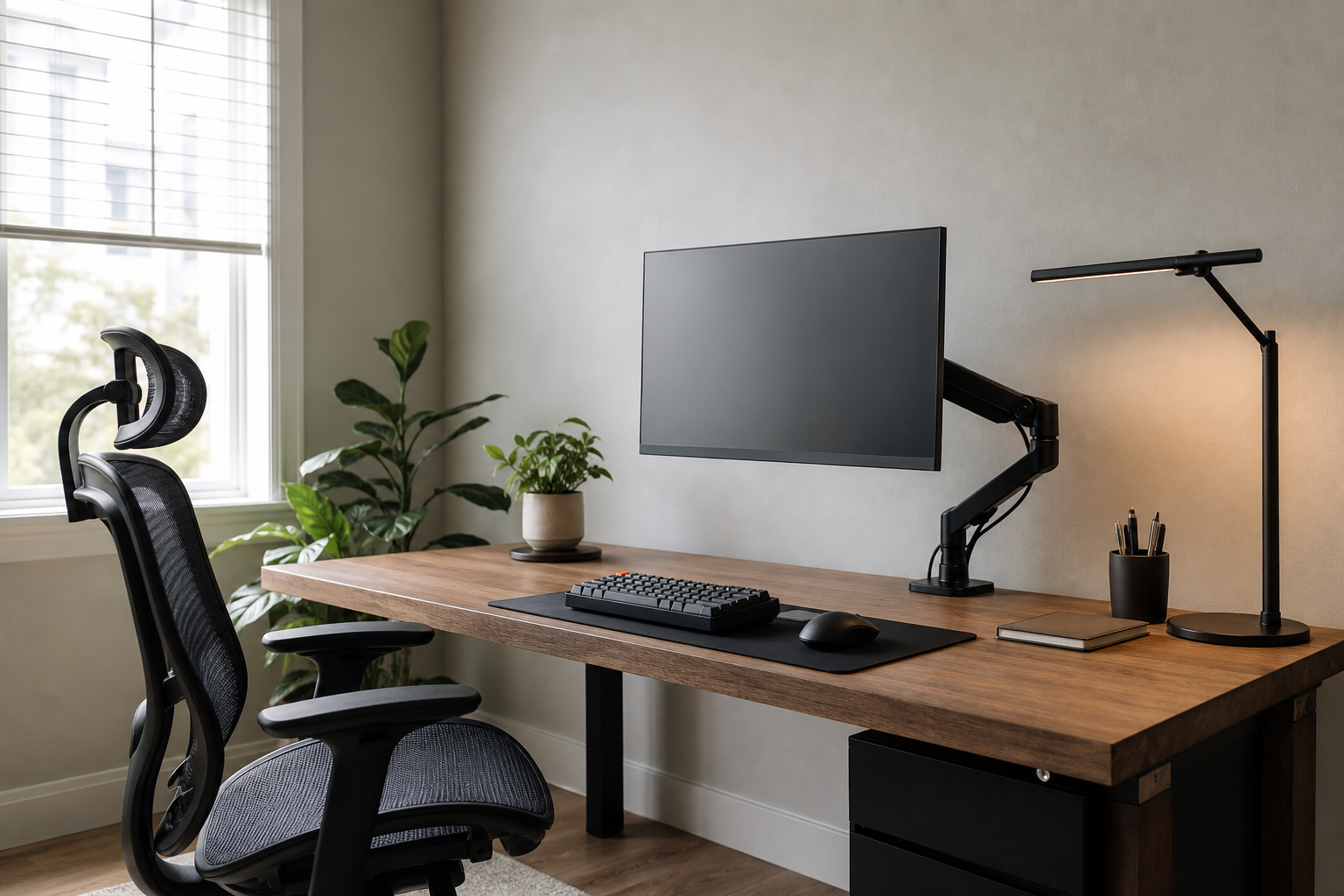
Start with the desk and screen layout
A useful home office setup starts with the layout, not the accessory list. Measure desk depth, monitor size and weight, laptop placement, and outlet position before choosing a monitor arm or cable management kit.
- For monitor arms, check screen weight, VESA compatibility, and the desk thickness supported by the clamp.
- Shallow desks often work better with shorter, steadier arm travel than with long extension arms.
- Cable trays, clips, and sleeves should be planned around power bricks and surge protector placement.
- Use stores neutrally to verify price, delivery, return policy, and availability.
Match keyboards and lighting to daily use
Keyboards and desk lamps are the tools you touch and look toward all day. Compare layout, key height, sound, brightness control, and light direction before focusing on style or brand.
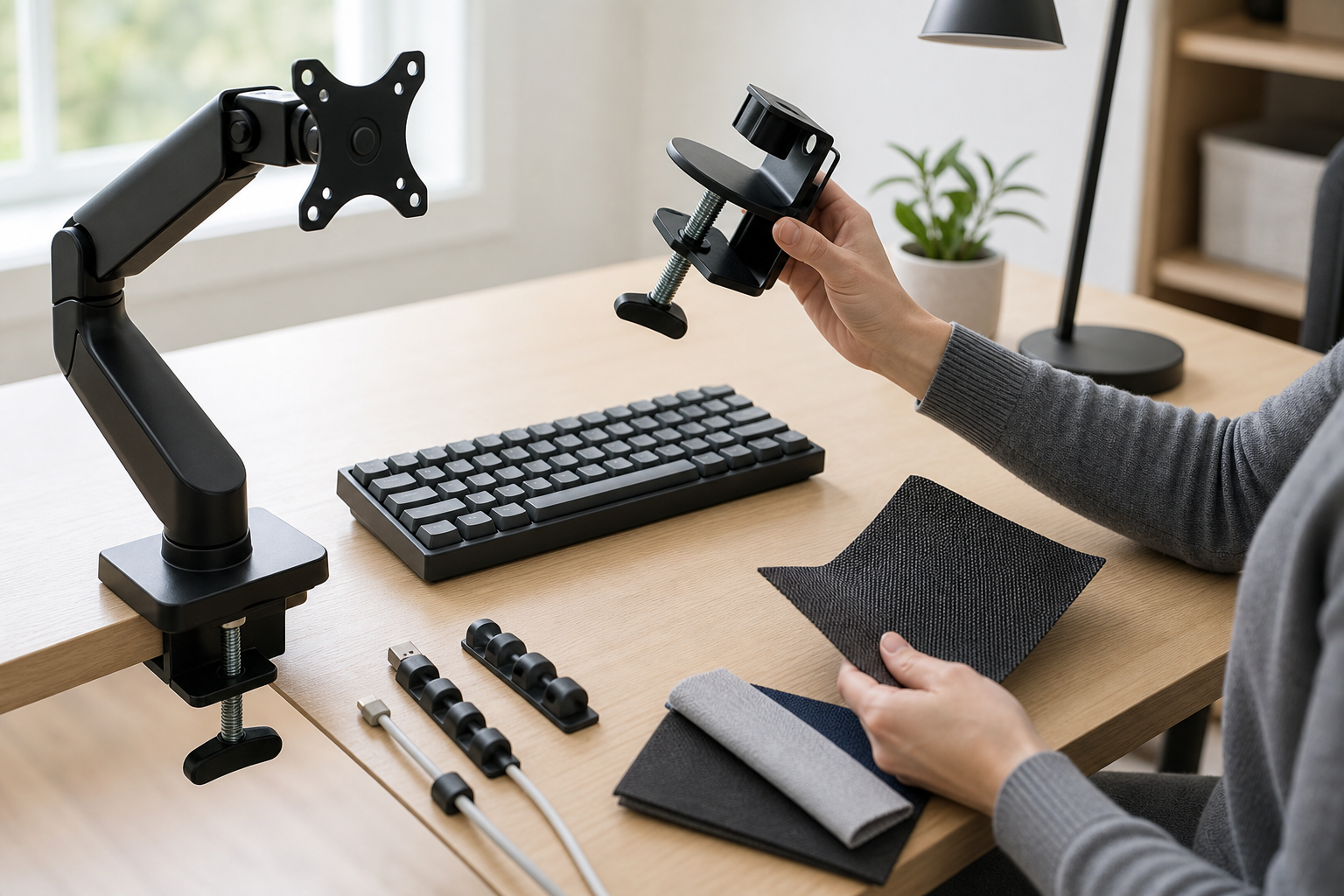
- Choose full-size, tenkeyless, or compact keyboards based on shortcut use and number-entry habits.
- Switch feel and noise matter if you share a room, take calls, or work late.
- A good task lamp should offer brightness steps, color temperature options, and an adjustable head.
- Place lighting to avoid reflections on the monitor and glare from the side.
Judge chairs by adjustability and fit
Ergonomic chairs feel different from person to person, so the practical comparison is adjustability. Look at seat height, back support, armrest movement, recline control, and breathable materials, and try the chair when possible.
- Treat a chair as a tool for changing posture comfortably, not as a guarantee of better health.
- Check whether armrests can line up with your desk height and keyboard position.
- Mesh, fabric, and leather-like finishes differ in warmth, cleaning, and long-term feel.
- For online orders, review assembly steps, return shipping rules, and warranty coverage.
Frequently asked questions
What should I compare first?
A practical evergreen guide to choosing monitor arms, keyboards, lighting, chairs, and cable management for a balanced home office setup. Start with use frequency, dimensions, warranty, replacement parts, recent reviews, and the return policy before chasing the lowest price.
Should I check Amazon, Coupang, or AliExpress first?
Use Amazon and Coupang for fast delivery categories, then compare AliExpress for low-cost accessories, parts, and bundles.
Where should I confirm price and availability?
Prices, coupons, shipping times, and stock change often, so confirm the final details on the merchant page before buying.